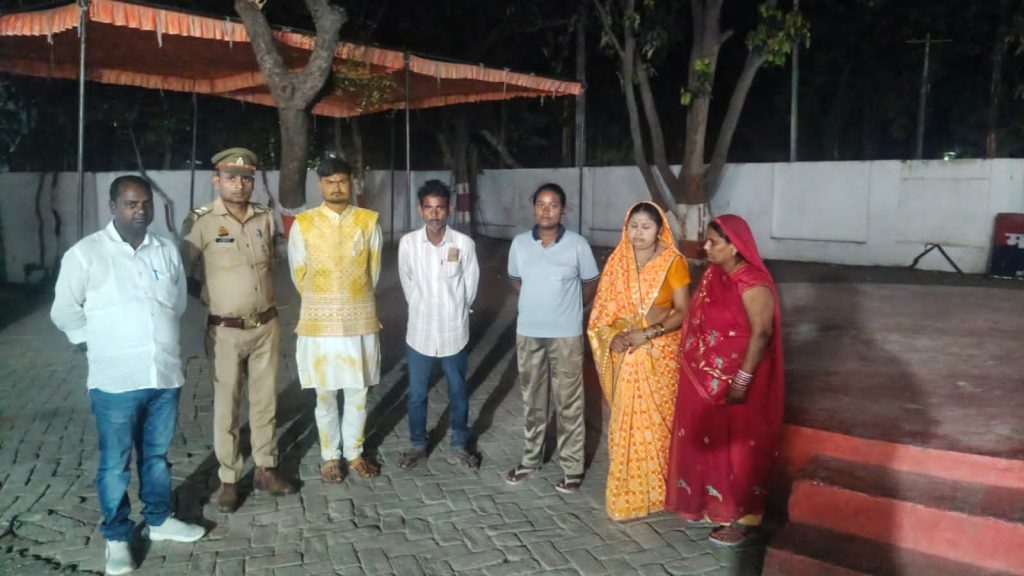
Vinita (Changed Name), a 17-year-old girl from Tarun Block of Ayodhya district, was at risk of child marriage when her family arranged her wedding on 9 May 2026. The groom’s family had traveled from Ahmedabad to Ayodhya, and all preparations for the marriage had been completed.
A vigilant volunteer associated with Aparajita Samajik Samiti, who belonged to the same village, learned about the planned child marriage and immediately reported the matter to Childline 1098. Acting promptly on the information, a joint team from Childline and Aparajita visited the girl’s residence before the arrival of the wedding procession (Barat). During discussions, the parents assured the team that they would not proceed with the marriage and expressed their willingness to comply with the law.
However, later that night, the volunteer informed the team that the Barat had arrived despite the family’s earlier assurance. Recognizing the urgency of the situation, the Childline and Aparajita teams, accompanied by the local Station House Officer (SHO), immediately reached the village. Both families were brought to the police station, where counseling sessions were conducted regarding the harmful consequences of child marriage and the legal provisions under the Prohibition of Child Marriage Act.
The Child Marriage Prohibition Officer (CMPO) intervened and directed both parties to provide written undertakings stating that the marriage would not be conducted until the girl attained the legal age for marriage. The CMPO also instructed Childline and Aparajita to continue regular follow-up with the family to ensure compliance.
As a result of the timely intervention, coordinated efforts of the volunteer, Childline, Aparajita team, police authorities, and the CMPO, the child marriage was successfully prevented. The Barat returned to Ahmedabad without the marriage taking place.
During counseling, Antima’s parents acknowledged that they were unaware of the legal age of marriage and the provisions of the Prohibition of Child Marriage Act. They expressed gratitude for the guidance provided and committed that they would not arrange the marriage of their children before they reach the legally prescribed age.
This case highlights the importance of community vigilance, timely reporting, and effective coordination among stakeholders in protecting children’s rights and preventing child marriage. The successful intervention not only safeguarded Antima’s future but also increased awareness within the family and community regarding the legal and social implications of child marriage.