Akshaya Tritiya has long been recognized as a culturally significant and auspicious day across several parts of India. However, alongside its religious importance, the day has also historically been associated with a heightened risk of child marriages. Over the years, multiple stakeholders—including government departments, civil society organizations, faith leaders, and child protection institutions—have worked collectively to challenge and reduce the prevalence of child marriage during this period.
Recent campaigns and sustained efforts have contributed to a shift from silent acceptance to increased public vigilance against child marriage. As highlighted in the broader campaign framework, Akshaya Tritiya is no longer viewed merely as a ceremonial occasion but as a high-risk period requiring proactive intervention, monitoring, and preventive action.
Despite visible progress, the ground reality indicates that child marriage has not been eliminated. Instead, it has adapted to changing circumstances. Traditional mass child marriage events have declined; however, the practice persists in more discreet and less visible forms, often conducted within private spaces to avoid detection. This evolving nature of the issue necessitates a more strategic, anticipatory, and coordinated response.
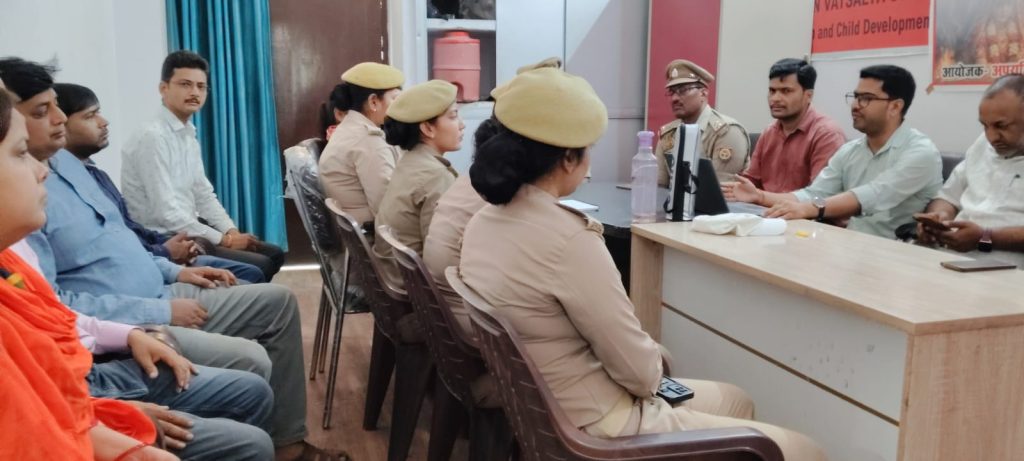
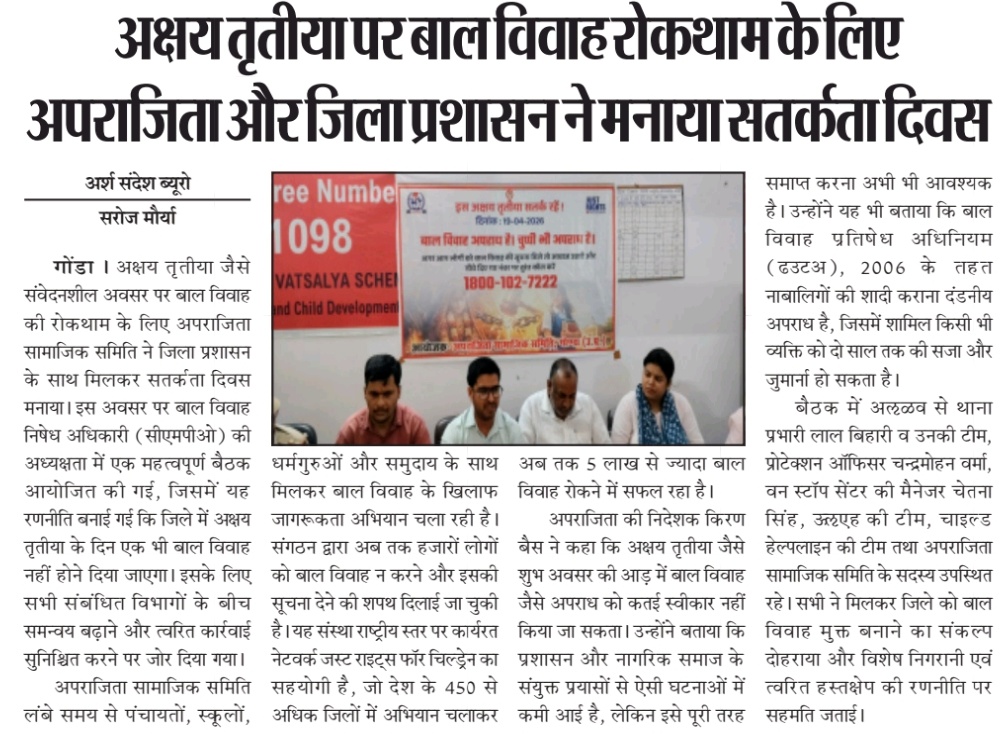
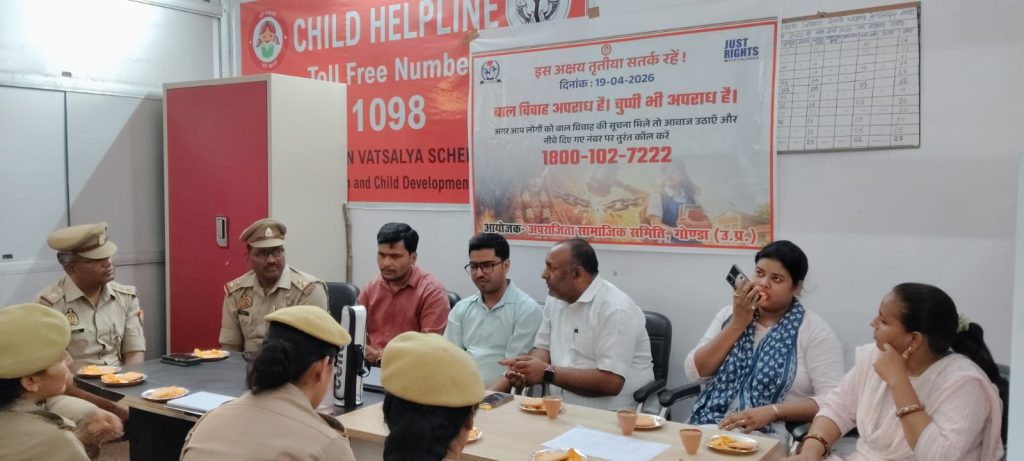
Recognizing this urgency, the campaign for Akshaya Tritiya 2026 emphasizes repositioning the day as a “Child Marriage Prevention Vigilance Day”, focusing on early detection, rapid response, and visible deterrence mechanisms. In alignment with this vision, Aparajita Samajik Samiti organized a district-level strategic workshop in Ayodhya to bring together key stakeholders and develop a unified action plan for preventing child marriage during this critical period.
Objectives of the Workshop
- To strengthen coordination among district-level stakeholders involved in child protection
- To identify high-risk areas, communities, and patterns associated with child marriage
- To establish a rapid response and rescue mechanism for timely intervention
- To enhance awareness and engagement with community and religious leaders
- To ensure convergence of services including legal support, rescue, rehabilitation, and follow-up care
- To operationalize the concept of Akshaya Tritiya as a Vigilance Day through actionable strategies
Leadership and Participation
The workshop was conducted under strong institutional leadership, ensuring accountability and active engagement from all stakeholders from different departments.
Participating Departments and Stakeholders:
- Anti-Human Trafficking Unit (AHTU)
- Child Welfare Committee (CWC)
- District Child Protection Unit (DCPU)
- One Stop Centre (OSC)
- Child Helpline
- Panchayat-level volunteers
- Civil Society Organizations (CSOs)
- Aparajita Samajik Samiti team
The participation reflected a multi-sectoral approach, bringing together enforcement agencies, protection systems, service providers, and community representatives.
Proceedings and Key Activities
4.1 Opening Session
The workshop commenced with an opening address by Abhay Pandey Programme Manager Aparajita Samajik Samiti, who emphasized the importance of proactive vigilance during Akshaya Tritiya. The discussion highlighted the changing patterns of child marriage and the need for early identification and preventive intervention. The Chair reiterated that child marriage is not merely a social issue but a violation of child rights, requiring strict enforcement of laws along with community awareness and behavioral change.
4.2 Situation Analysis and Departmental Inputs
A detailed discussion was held to assess the current situation and identify gaps in prevention efforts.
- AHTU shared insights on legal provisions, enforcement challenges, and coordination with police units
- SJPU emphasized the role of child-friendly policing and immediate response mechanisms
- CWC outlined procedures for child rescue, care, and legal interventions
- DCPU presented data on vulnerable areas and discussed coordination at the district level
- OSC highlighted support services for girls at risk, including counseling and protection
- Child Helpline explained its role in emergency response, shelter provision, and referral services
These presentations helped build a shared understanding of roles, responsibilities, and operational challenges.
4.3 Identification of High-Risk Areas
Participants collectively identified high-risk zones based on past incidents, socio-cultural practices, and field intelligence. Panchayat-level volunteers played a crucial role in sharing grassroots insights.
Key indicators used for identifying risk included:
- Previous child marriage cases
- Early school dropouts among girls
- Migration patterns
- Economic vulnerability
- Community practices and beliefs
4.4 Group Discussion and Strategy Development
Participants were divided into groups to discuss specific themes:
- Community surveillance and reporting mechanisms
- Engagement with religious leaders and influencers
- Coordination between departments during rescue operations
- Use of helplines and communication channels for rapid response
- The discussions led to practical, field-oriented strategies that could be implemented immediately.
5. Key Decisions and Action Points
The workshop concluded with a set of clear, actionable decisions to ensure effective prevention of child marriage during Akshaya Tritiya:
5.1 24×7 Functioning of CWC
The Child Welfare Committee will remain operational round-the-clock to ensure immediate response to reported cases and facilitate timely legal and protective actions.
5.2 Awareness Campaign with Religious Leaders
HUB, OSC, and Aparajita Samajik Samiti will jointly engage with priests and religious leaders to promote messaging against child marriage and encourage community vigilance.
5.3 Rescue and Mobility Support
Rescue vehicles will be arranged jointly by DCPU and Aparajita Samajik Samiti to enable rapid deployment of teams in case of emergencies.
5.4 Child Helpline Support System
Child Helpline will provide immediate support including shelter, food, and referral services for rescued children.
5.5 Law Enforcement Support by AHTU
AHTU will ensure maintenance of law and order, facilitate legal procedures, and take necessary action against offenders.
5.6 Formation of Joint Field Teams
Two dedicated teams will be deployed for field monitoring:
One team led by AHTU In-charge
One team led by OSC Manager
Members from Child Helpline, Aparajita, and other stakeholders will support these teams. CWC and DCPU will provide legal and procedural assistance.
6. Implementation Strategy
The implementation strategy focuses on prevention, vigilance, and rapid response, including:
- Continuous monitoring of high-risk areas
- Active community engagement and awareness drives
- Real-time communication through coordinated networks
- Immediate action on reported cases
- Post-rescue care and rehabilitation support
7. Expected Outcomes
- The coordinated efforts are expected to achieve the following outcomes:
- Prevention of child marriage cases during Akshaya Tritiya
- Increased awareness among communities and religious leaders
- Strengthened inter-departmental coordination
- Improved responsiveness of child protection systems
- Enhanced accountability and visibility of preventive actions
8. Conclusion
The district-level strategic workshop successfully brought together all key stakeholders under a unified platform to address the issue of child marriage during a high-risk period. The discussions, strategies, and decisions reflect a shift from reactive approaches to proactive, preventive, and coordinated action. By aligning with the broader campaign vision of observing Akshaya Tritiya as a Child Marriage Prevention Vigilance Day, the district administration and its partners have demonstrated strong commitment towards safeguarding the rights and well-being of children. The collaborative framework developed through this workshop is expected to serve as a model for effective child marriage prevention, ensuring that no child is forced into early marriage and that every child’s right to education, protection, and dignity is upheld.